
Component Speakers vs. Line Array Speakers: Which Is Better for Weddings and Events?
- Juno the DJ
- Jul 9, 2025
- 8 min read
Updated: Jul 17
With the growing popularity of line array speaker systems, I wanted to take an objective look at the pros and cons of both line array and traditional component speaker systems—from both a DJ's perspective and a client's perspective. To keep the comparison fair, I selected two professional systems with similar retail prices: the EVOLVE 90 line array system, which retails for approximately $6,800 per pair, and a traditional component system consisting of two Yamaha DZR12 powered speakers and two Yamaha DXS18XLF subwoofers, with a combined retail price of approximately $6,200.
Tale of the Tape.
Before comparing their real-world performance, let's first take a look at the specifications of each system. While specifications don't tell the whole story, they do provide a good starting point for understanding the strengths and intended purpose of each design.

Specification | EV EVOLVE 90 | Yamaha DZR12 + 2× DXS18XLF |
Approx. Retail Price | $6,800 | $6,200 🏆 |
System Type | Powered Column Array | Powered Component System |
Amplifier Power | 4,000 W | 7,200 W 🏆 |
Maximum SPL | 134 dB | 139 dB 🏆 |
Frequency Response | 35 Hz – 18 kHz (-3 dB) | 30 Hz – 20 kHz 🏆 |
Coverage Pattern | 120° H × 25° V 🏆 (Wider horizontal coverage) | 90° H × 60° V 🏆 (Greater vertical coverage) |
Bluetooth Audio | ✔ Yes 🏆 | ✘ No |
DSP Functions | QuickSmart DSP, Bluetooth App Control, Built-in Mixer 🏆 | 96 kHz DSP, FIR-X Tuning, D-Contour, Delay, EQ, Limiter |
Built-in Mixer | ✔ Yes 🏆 | ✘ No |
Expandability | Add additional EVOLVE systems | Easily expandable with additional tops and subs 🏆 |
Weight (Complete System) | 196 lbs 🏆 | Approx. 310 lbs |
Setup Time | Faster 🏆 | Moderate |
Best Suited For | Corporate events, ceremonies, clean aesthetics, fast setup | Large weddings, dance parties, festivals, and high-output events 🏆 |
Off the Hoof
Based on the specifications alone, I'd have to give the edge to the Yamaha component system. It delivers nearly twice the amplifier power, higher maximum SPL, and does so at a slightly lower price point.
That said, the EV EVOLVE 90 has some significant advantages of its own. It offers wider horizontal coverage, a much lighter and more compact design, and an integrated digital mixer with Bluetooth control, making it a versatile all-in-one solution for many applications.
Specifications, however, only tell part of the story. The real question is: how do these two systems compare where it matters most—at actual weddings, private parties, and corporate events? Let's find out.

Portability & Setup
This category primarily benefits the DJ, but it can also have a small impact on the client.
The EV EVOLVE 90, like most portable line array systems, is designed with portability in mind. A pair of EV90s, along with the rest of a typical DJ setup—including a controller, lighting, uplights, cables, and accessories—can usually fit inside a large four-door sedan or a midsize SUV.
By comparison, a Yamaha component system consisting of two DZR12s and two DXS18XLF subwoofers requires significantly more cargo space. Unless you own a full-size SUV, such as a Chevrolet Suburban, or a cargo van, a trailer is generally recommended for transporting the entire setup.
Once you arrive at the venue, the EV90 continues to have the advantage. Both systems can typically be loaded onto a single hand truck or dolly, allowing the entire PA to be brought inside in one trip. With the Yamaha component system, however, the larger cabinets and additional pieces often require two or three trips from the vehicle.
Actual setup time is surprisingly similar. While the Yamaha system requires wiring twice as many speakers, the EV90 requires assembling the column sections and mounting them onto the subwoofer. In the end, both systems can be set up efficiently with experience.
How Does This Affect the Client?
In most venues, the client will never notice the difference. However, if the event is being held in a private residence or another location where the client is responsible for any property damage, the larger size and weight of the Yamaha speakers slightly increase the risk of bumping walls, doorways, or furniture during load-in. A careful, experienced DJ can avoid these issues by simply taking their time.

Winner: Portability & Setup 🏆
The clear winner in this category is the EV EVOLVE 90. Its lighter weight, compact design, smaller footprint, and easier transportation make it the better choice for DJs who prioritize portability and quick load-ins.
Application Versatility
This is one category where the EV EVOLVE 90 clearly has the advantage.
The EV90 is one of the most versatile portable speaker systems on the market. Musicians, solo performers, and acoustic artists often use a single EV90 for smaller events because of its built-in digital mixer, DSP controls, Bluetooth capability, and compact design. It truly is an all-in-one system.
From a DJ's perspective, Electro-Voice states that a pair of EV90s is capable of covering audiences of up to 500 people. Based on the published specifications and having personally heard the system perform, I believe that's possible under the right conditions. However, for weddings and private events where high-quality music reproduction and a full dance floor are the priority, I feel the sweet spot is closer to 300 guests or fewer.
Where the EV90 Really Shines
The biggest advantage of a portable column array isn't necessarily the reception—it's everything leading up to it.
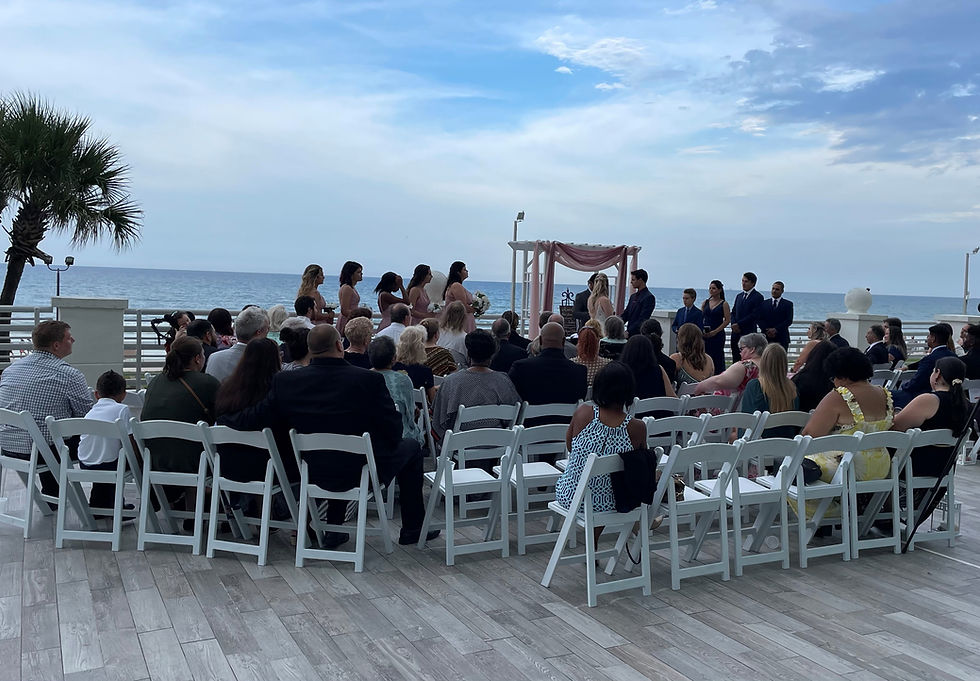
At many weddings, the ceremony, cocktail hour, and reception all take place in separate locations. A pair of EV90s makes covering all three areas incredibly simple.
One EV90 can be placed at the ceremony while the second handles cocktail hour. Once the ceremony concludes, cocktail hour music begins immediately. The ceremony system can then be quickly transported into the reception room. Because the EV90 is compact and requires only a power cable and audio connection, the transition is fast, clean, and relatively unnoticed by guests.
By the time guests enter the reception, both systems are in place and ready for the grand entrance.
Trying to accomplish the same workflow with a traditional component system would require considerably more effort. While it's certainly possible to move component speakers between locations, they're larger, heavier, require more trips, and are much less discreet during transitions.
My Preferred Wedding Setup
Although the EV90 is extremely versatile, I personally prefer to dedicate my Yamaha component system to the reception.

For ceremonies and cocktail hours, I recommend using a dedicated professional battery-powered speaker. I personally use the EV Everse 8, and I've been extremely impressed with both its versatility and its sound quality for such a compact speaker.
Juno's Take
Using a single EV90 for the ceremony or cocktail hour absolutely provides an upgrade in sound quality compared to most portable battery-powered speakers. If the DJ has everything prewired and planned ahead of time, moving that speaker into the reception can be done quickly and with very little attention from guests.
That said, after performing hundreds of weddings, I've found that guests attending a ceremony or cocktail hour are usually talking, socializing, and enjoying the atmosphere—not critically listening to the sound system. When background music consists of Sinatra, jazz, acoustic instrumentals, or light love songs played at conversational volume, I don't believe most guests notice a significant difference between a quality battery-powered speaker like the EV Everse 8 and a larger professional system.
Unless you're providing audio for a live musician or vocalist, I believe the convenience of a battery-powered speaker outweighs the slight improvement in sound quality offered by a larger system.

Winner: Application Versatility 🏆
Winner: EV EVOLVE 90
The EV90 earns the win in this category because of its flexibility. Whether you're performing a ceremony, cocktail hour, corporate presentation, or small private event, its portability, built-in mixer, Bluetooth connectivity, and quick setup make it one of the most adaptable speaker systems available.
Setup Versatility
Winner: Yamaha Component System 🏆
While the EV EVOLVE 90 wins in portability, the Yamaha component system clearly wins when it comes to setup flexibility.
The biggest advantage of a traditional component system is that the top speakers and subwoofers operate independently. Unlike a column array, the tops don't have to be mounted directly on the subwoofers. This gives the DJ much greater freedom in speaker placement, allowing the system to be optimized for the acoustics of each venue.
One of the most important factors in professional audio is subwoofer placement.

When using two subwoofers, the ideal configuration is to keep them together—either side by side, stacked, or in a cardioid/front-to-back arrangement. Grouping the subs together produces a smoother, more consistent bass response throughout the room while also reducing phase cancellation and "dead zones." Placing the subs against a solid wall can further reinforce low frequencies and increase overall bass output.
Most portable column array systems, however, require the subwoofers to remain underneath each column speaker. This often places one subwoofer on each side of the DJ booth, which is visually appealing but not always acoustically ideal.
A component system also provides much greater flexibility for expanding your setup. Depending on the event, additional speakers, delay speakers, truss systems, lighting, video displays, or decorative elements can all be incorporated without affecting speaker placement.
For DJs who regularly perform in different venues and audience sizes, this flexibility is a major advantage.

Sound Quality
Winner: Yamaha Component System 🏆
This is the category that matters most—and, in my opinion, it's where the Yamaha component system separates itself.
On paper, the EV EVOLVE 90 is impressive. It's rated at 134 dB maximum SPL, features an 18-inch subwoofer capable of reaching 35 Hz, and includes sophisticated DSP processing. For many applications, it sounds excellent.
However, after hearing the system in person, I don't believe it delivers the same full-range impact as a professional component system.
As room sizes increase and volume levels rise, the differences become more noticeable.
To my ears, the Yamaha DZR12 and DXS18XLF combination produces a fuller, richer sound with noticeably greater headroom. The highs remain crisp without becoming overly harsh, while the dedicated subwoofers deliver smooth, powerful bass that fills the room rather than simply making noise.
In larger ballrooms and high-energy wedding receptions, the Yamaha system maintains clarity and impact even at higher volumes. The bass feels effortless, and the overall sound remains balanced throughout the room.
By comparison, I found the EV EVOLVE 90 to have a more compact sound signature. The bass can feel tighter but less substantial, and at higher output levels it doesn't produce the same sense of depth or authority that I expect from a premium reception sound system.
Sound quality is always subjective, but after years of performing weddings and private events, I personally prefer the warmth, dynamics, and overall fullness of a traditional component speaker system
Juno's Final Take
After comparing both systems, I believe they each serve a different purpose.
If I were an established DJ, I would absolutely own at least one portable line array system. It's an outstanding solution for wedding ceremonies, cocktail hours, corporate presentations, and smaller events of fewer than 40 guests. The sleek appearance blends beautifully into upscale venues, setup is incredibly fast, and clients appreciate the clean, modern look.

If I were just starting out as a DJ with a smaller vehicle and primarily booking intimate events, I would also seriously consider beginning with a compact line array system. They're easy to transport, quick to set up, and deliver excellent sound for smaller venues.
However, as my business grew and I began booking larger weddings and private events, my first major equipment upgrade would be a professional component speaker system.
Even though component systems are larger and heavier, they provide more amplifier power, greater headroom, better speaker placement options, and, in my opinion, superior overall sound quality. At many price points, a comparable component system will outperform a column array in maximum output, dynamics, and low-frequency performance.
Today, my ideal setup is to own both.
I use compact speakers where portability and versatility matter most, and I reserve my Yamaha component system for receptions where creating an incredible dance floor experience is the priority.
At the end of the day, clients don't hire a DJ because they know what speakers are being used. They hire a DJ because they want their family and friends to have an amazing time.
That experience comes down to two things:
A great DJ who knows how to read the crowd.
A sound system capable of delivering the energy the event deserves.
For the types of weddings and private events I perform, I believe the Yamaha DZR component system delivers that experience better than the EV EVOLVE 90.



Comments